Keep Praying, Keep Building: Why Nigeria's Faithful Must Pray and Work, and How to Read Scripture for Yourself
Seeing how religion is misused does not mean abandoning prayer. This article draws on the Bible and the Quran to show why Nigerians should keep praying for their country, how the prophets paired prayer with action and confronted power, and a five-part test for reading scripture for yourself.
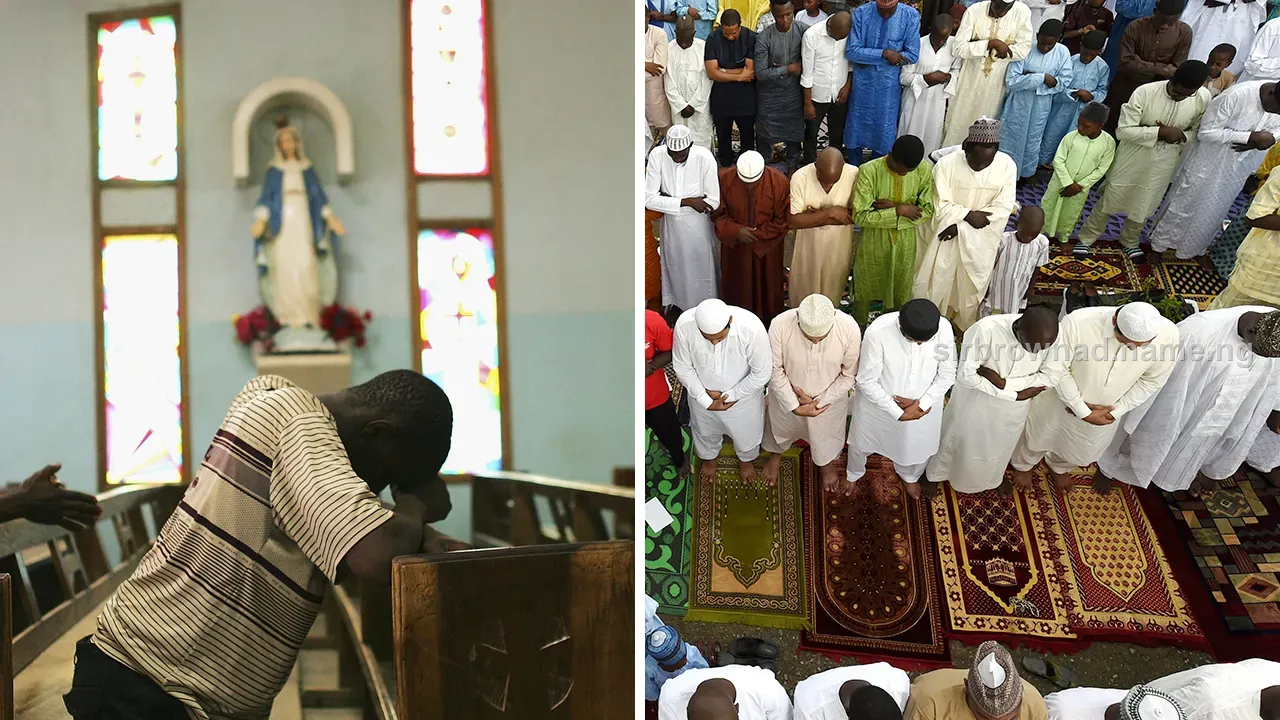
Someone who reads honestly about how religion is misused in Nigeria might reach a tempting conclusion: stop praying, stop attending, stop trusting any preacher. That would be the wrong lesson, and it would hand the country's worst people exactly what they want.
Picture a trader in an Onitsha or Kano market opening her shop before sunrise. She says a short prayer. Then she counts her stock twice and writes the figures down. Nobody who watches her would say the prayer was wasted, and nobody would say the counting was unspiritual. The two actions belong together, and that small scene holds the whole argument of this article.
The cure for corrupted faith is not less faith. It is faith that has learned to ask questions and to roll up its sleeves.
What Prayer Actually Is
In Islam, dua is called worship itself in a widely quoted hadith, and the Quran invites believers to call upon God and promises a response (40:60, 2:186). Salah, the five daily prayers, is performed in straight lines, shoulder to shoulder, rich beside poor, young beside old, facing one direction. Few practices in the world train a community in equality the way that line does.
In Christianity, the prayer Jesus taught includes the line that God's kingdom come and God's will be done on earth as it is in heaven (Matthew 6:10). Pay attention to the word earth. Christians are not told to pray only for a better afterlife. They are told to pray for the order of heaven to arrive in the place where they live, with its markets, councils, clinics and courts.
Both traditions also command prayer for the society you live in. Jeremiah 29:7 told exiles in Babylon to seek the peace and welfare of the city where they lived and to pray for it, because their own welfare was tied to it. First Timothy 2:1-2 urges prayer for kings and everyone in authority so that people may live quiet and peaceful lives. A believer who prays for Nigeria is not wasting breath. They are obeying a direct instruction.
And prayer does something that no policy can do on its own: it keeps a person's conscience awake. It is hard to rob a nation in the morning and kneel honestly before God in the afternoon. Prayer that is real eventually makes demands on the person praying.
Faith With Hands: The Pattern in Both Scriptures
One of the most useful discoveries a believer can make is how often scripture pairs prayer with plans.
Nehemiah rebuilt the wall of Jerusalem and described his method in one sentence: his people prayed to God and posted a guard day and night (Nehemiah 4:9). Prayer and security rota, side by side.
Joseph, in Genesis 41 and in the Quran (12:55), is not rescued from the prison by a miracle alone. He interprets a dream and then proposes a fourteen-year food policy: store grain during the good years so the country survives the lean ones. In the Quran he asks to be placed in charge of the storehouses because he is a knowing guardian. A prophet applied for a ministry job because the country needed honest management.
The Prophet Muhammad's migration to Madinah was prayed over and also planned. According to the well-known reports in Sahih al-Bukhari, he hired a guide, chose an unexpected route and hid in a cave on the way. The most trusted man in the city did not simply say "Allah will protect me" and walk out the front door. A famous teaching attributed to him, reported by al-Tirmidhi, says to tie your camel and then trust in God.
The Quran states that God does not change the condition of a people until they change what is within themselves (13:11), and that a person has only what he strives for (53:39).
James 2:14-17 asks what use it is to tell a hungry person "go in peace, be warm and filled" without giving them anything to eat.
Put these together and the message is plain. Trusting God does not mean skipping the work. It means doing the work with a clear conscience and leaving the outcome to Him. The believers who say "we are only praying" while the budget is stolen are not holier than the activists and auditors. They are using holiness as an excuse for passivity.
Prophets Who Confronted Power
If you want to know what scripture expects of believers when rulers abuse their office, read how the prophets behaved.
Nathan walked into David's palace and told a king to his face that he had committed murder and theft (2 Samuel 12).
Elijah confronted King Ahab after Queen Jezebel had arranged for a man named Naboth to be falsely accused and killed so the palace could take his vineyard (1 Kings 21). It is the oldest recorded land grab with fake paperwork in the Bible, and God sends a prophet to speak against it.
Amos spoke for God against religious festivals that sat comfortably beside injustice, and asked for justice to roll down like water (Amos 5:21-24). Isaiah 1:11-17 says the same: stop the offerings, learn to do right, seek justice, defend the oppressed.
Musa (Moses) is told in the Quran to go to Pharaoh, the most powerful ruler of his time, and speak to him gently but firmly (20:43-44). A reported hadith says one of the best forms of striving is a word of truth before a tyrannical ruler.
In Sahih al-Bukhari and Sahih Muslim, the Prophet publicly rebuked an official he had sent to collect zakat when the man kept some of what he received and said it was a gift. The Prophet asked why the man did not sit in his parents' house and see whether any gifts came to him there. The point is that a gift given to an official because of his office belongs to the office, not the person. It is one of the clearest early rules on conflict of interest anywhere.
Abu Bakr's reported first address as leader asked the people to obey him as long as he obeyed God, and to stop obeying him if he disobeyed.
Now compare that with Nigeria today. A believer who raises a question about public money, voter bribery or inflated contracts is not stepping outside their faith. They are standing exactly where Nathan, Elijah, Amos and Musa stood. And an imam or pastor who remains silent in the presence of public theft has some uncomfortable reading to do.
Why Prayer for Nigeria Must Not Stop
New Updates
1. Despair is the soil of fraud
Throughout this platform's series on fraud, one pattern keeps showing up: scams grow where hope runs dry. People who believe nothing can improve are the most likely to pay for a shortcut. Hope that is rooted in prayer, community and a long view is protection against the get-rich-quick lie. Telling Nigerians to stop hoping would make fraud easier, not harder.
2. Prayer builds relationships across lines the politicians exploit
A congregation that prays for the whole country, and a mosque that does the same, are teaching their members to see Nigeria as one project. When Muslims and Christians pray for each other's safety in the same week that an election is being fought, they are quietly rejecting the argument that their neighbour is their enemy. That has political value that no jingle can match.
3. Prayer reminds the powerful that they will answer to someone
Every ruler who truly believes in a day of reckoning has a reason to hesitate before stealing. Both traditions teach it: Proverbs 29:2 says the people rejoice when the righteous rule and groan when the wicked do, and the Quran repeatedly warns of an accounting for every trust (4:58). Keeping that idea alive in the national conversation is not superstition. It is one of the few restraints that works when no camera is watching.
4. Prayer protects the person doing the work
Anyone who tries to improve a corrupt environment will meet fear, fatigue and temptation. Believers who fight for clean elections, honest budgets or fair courts tend to last longer when they are sustained by something beyond their own energy. Prayer is not a replacement for the struggle. It is how many people stay in it.
How to Pray for Nigeria Like Someone Who Intends to Act
The test of a prayer is what the person does when they stand up.
Pray for honest elections, then register, collect your voter card, vote, and refuse any money offered for your vote.
Pray that those in authority will be wise and just, then follow the budgets and projects in your own local government and ask questions in public meetings.
Pray for the poor and the sick, then give regularly to a verified charity, a clinic or a scholarship, and not to someone promising that your gift will return multiplied.
Pray for protection from fraud, then verify every alert, every offer and every request for money before you act, as every article on this platform insists.
Pray for the schools, then visit one, mentor a child, or support a teacher.
Pray for unity between Muslims and Christians, then build one friendship across that line and take the first step in a hard conversation.
Pray for the courage of leaders who speak against injustice, then back them publicly when they do.
A prayer followed by one of these actions is a better prayer. A prayer that replaces every action is the kind scripture warns about.
Read Your Own Scripture: A Five-Part Test
The people who exploit faith count on the believer not checking. Here is a simple method that works in both traditions and does not require a degree.
1. The context test
Read the verses before and after the one being quoted. Many misleading teachings depend on a single sentence lifted out of a paragraph that says something else.
2. The money test
Ask who is paid if you accept this teaching. If the answer is only the speaker, slow down. Paul warns against people who suppose godliness is a means of gain (1 Timothy 6:5), and the Quran says some scholars devour people's wealth wrongly and hinder them from God's way (9:34).
3. The fruit test
Jesus said to know false prophets by their fruit (Matthew 7:15-20). In plain terms: look at the lives, the finances and the families of those teaching, and at what happens to the people who follow them over several years. A teaching that leaves followers poorer and the teacher richer has failed its own examination.
4. The proof test
The Quran asks those making a claim to bring their proof if they are truthful (2:111) and tells believers to verify news brought to them by an unreliable source (49:6). It also praises those who listen to speech and follow the best of it (39:18). The Bereans in Acts 17:11 are praised for examining the Scriptures daily to see whether what they heard was true. Asking for a verse is obedience.
5. The accountability test
Ask whether the institution can be audited. Paul arranged for trusted representatives to handle the collection so that nobody could find fault with how the money was managed (2 Corinthians 8:20-21). A body that cannot show its books to its own members is asking for trust it has not earned.
None of these tests is rebellion. They are what scripture asks of every believer, and they take no more than a Bible app or a Quran translation and a willingness to look.
What a Congregation Can Do This Year
Set up a finance committee of ordinary members, with a published annual report, and invite questions at a yearly meeting.
Create a safe, confidential channel for members to report concerns about money, abuse or fraud.
Keep investment pitches, referral schemes and commission-based business offers out of services, study circles and group chats.
Run a monthly class on scripture literacy and on spotting fraud, using the same WhatsApp groups scammers use.
Fund one local project that members can see, such as a borehole, a scholarship, a skills class or a clinic day, and report on it publicly.
Organise a voter registration drive and an interfaith election-day prayer and peace walk, together with the neighbouring church or mosque.
Invite a speaker from the other faith to talk about what the two communities share in this country.
An Honest Caution
Praying for Nigeria will not hand the country a miracle on its own, and it would be dishonest to pretend otherwise. Some prayers are answered through the believers who rise and do something. Others take decades. Nobody should promise a date. What can be promised is that a nation whose faithful pray, verify, give honestly, vote carefully and speak the truth to power has a much better chance than one that only does the first.
THE PRAYER OF A NATION IS ONLY AS STRONG AS THE CHARACTER OF THE PEOPLE PRAYING IT.
Conclusion
The question is not whether Nigerians should keep praying. They should, and both the Bible and the Quran tell them to. The question is what kind of believers they will be while they pray: believers who wait for a miracle to clean up what their own silence allowed, or believers who pray in the morning, check the facts at noon and stand for justice in the evening.
Nehemiah prayed and posted a guard. Joseph prayed and stored the grain. The Prophet trusted God and tied his camel. Nathan, Elijah, Amos and Musa prayed and then walked into the palace. That is the tradition Nigerian believers have inherited, and it is bigger than any preacher who tells them to keep quiet and keep paying.
Keep praying. Keep reading for yourself. Keep your hands busy. Platforms like browncode.name.ng will keep publishing the facts behind fraud and trust in Nigeria, because a believing nation that also verifies is very hard to rob.
Get new Religion alerts
One email when a new religion article like this one goes live. No spam, unsubscribe anytime.
Join my WhatsApp channel
Get new articles, fraud alerts and web security tips straight to your phone.
Found this useful? Share it.
Someone you know may be about to fall for a scam or make a costly mistake. Send them this.
This article was originally written and published by Sir Brown AD.
Advertise with us
Sir Brown AD
Keep reading, or tell me about what you're building.
Discussion