Faith Is Not the Problem. What Is Sold in Its Name Is: How Religion Became Part of Nigeria's Problem
Nigeria is one of the most religious countries on earth and one of the most troubled. Sir Brown AD examines how faith is exploited in churches and mosques, what the Bible and the Quran actually say about the claims believers hear, and what should be done about it.
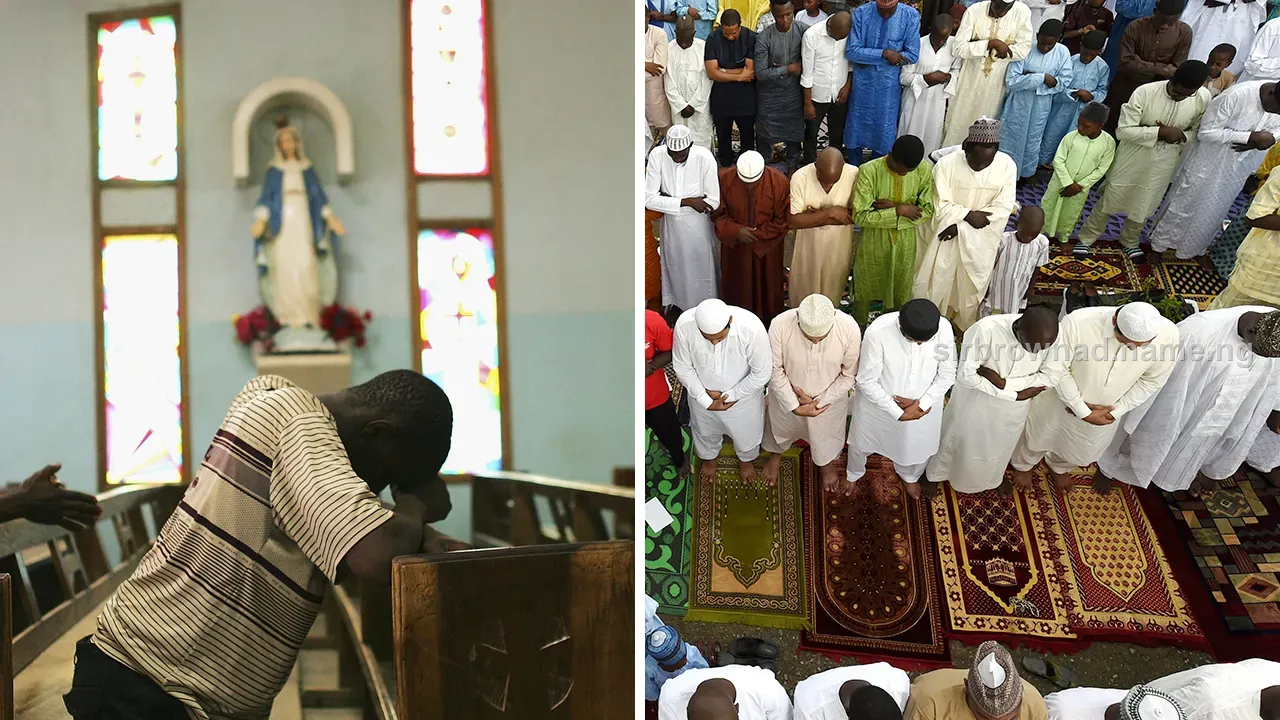
Nigeria is one of the most religious countries on earth, and one of the most troubled. Both things are true at the same time, and the gap between them is the subject of this article.
This is not an attack on faith. It is not an attack on Christians or on Muslims, and it is not written to please anyone who simply dislikes religion. It is written for the believer who has prayed for years, fasted, paid offerings and zakat, attended every service and every Jumu'ah, and still watches the roads, the hospitals, the schools and the budgets stay broken. That believer deserves an honest answer, and the honest answer is uncomfortable: the problem is not that Nigerians believe too much. It is that too many Nigerians have been taught things that are not in the book they say they follow.
A nation can pray every single day and still be robbed, if what it prays under is a lie told in God's name.
The Paradox Nobody Wants to Look At
Pew Research Center estimates that about 56 percent of Nigerians are Muslim and about 43 percent are Christian, which makes Nigeria the only country that ranks among both the ten largest Muslim populations and the ten largest Christian populations in the world. Pew also found in earlier research that nearly nine in ten Nigerian Christian adults attend worship every week, one of the highest rates it has recorded anywhere. Nobody can honestly say Nigeria lacks prayer.
Now put that beside the 2025 Corruption Perceptions Index from Transparency International. Nigeria scored 26 out of 100 and ranked 142nd out of 182 countries. The score did not move from the year before, and the ranking slipped by two places.
A careful writer must be clear about what this does and does not prove. It does not prove that religion causes corruption. Oil money, weak institutions, colonial borders, poor policing and an election system that rewards money all play their part. What it does prove is narrower and still important: attendance, prayer and devotion, on their own, have not produced integrity. Something in how faith is taught, used and protected is failing to turn belief into behaviour. Finding that something is the work.
One more honest note before we begin. Nigeria has not asked about religion in its census since 1963, so every percentage you will ever read about Christians and Muslims in Nigeria is an estimate. Be careful with anyone who quotes a precise figure as if it were official.
Six Ways Religion Becomes Part of the Problem
1. Faith identity comes before national identity
In a 2006 Pew survey, 91 percent of Nigerian Muslims and 76 percent of Nigerian Christians said their religion mattered more to them than being Nigerian, African or part of an ethnic group. In the same survey, 86 percent of Christians and 90 percent of Muslims named corrupt political leaders as a serious problem. The survey is old, but read those two results together, because the pattern has not gone away.
Almost everyone agrees that corrupt leaders are a problem. Almost everyone also ranks religious identity above national identity. That is the ideal condition for a corrupt politician to survive. When a candidate is judged first by whether he prays the way you pray, and only later by whether he can deliver, a thief from your faith is safer than an honest man from another one. Every election season shows this: the first question asked about a candidate is who he is, not what he has done.
2. Leaders who cannot be questioned
Respect for religious leaders is healthy in both traditions. The trouble starts when respect hardens into immunity. In some churches, believers are told "touch not the Lord's anointed" the moment someone asks where the money went. In some study circles, followers are told to accept what the teacher says without asking for the evidence. A leader nobody may question is a leader nobody can audit, and an institution that cannot be audited eventually collects what every unaudited institution collects: money, power and favours.
The same "do not ask" culture then appears in politics, in workplaces and in families. A population trained from childhood not to question the person at the front of the room will not question the person at the front of the country.
3. Miracle replaces method
When a road collapses, people say God will fix it. When a graduate cannot find work, it is a spiritual attack. When a business fails, someone in the village is responsible. These explanations comfort, and they are almost always wrong. The real causes are usually boring: a contract inflated to four times its value, a budget line that vanished, a school that has no teachers, a clinic with no drugs because someone sold them.
New Updates
A people taught to look for witches instead of ledgers will never audit anything. The political scam article on this platform shows how inflated contracts, ghost projects and budget padding move public money into private pockets, and none of that can be prayed away without also being investigated, reported and voted against.
4. Money flows in one direction
The same 2006 Pew survey asked whether God will grant material prosperity to all believers who have enough faith. About 95 percent of Nigerian Pentecostals said yes. Nobody should mock a hurting person for hoping, because the economy is hard and hope is not a crime. But when a teaching says your wealth depends on the size of your faith, poverty quietly becomes your fault, and giving to the preacher becomes the cure.
Seed offerings, special covenant payments, paid deliverance sessions and miracle oil on one side, and charms, talismans and spiritual packages sold for fortune or protection on the other, all work the same way: a promise that cannot be checked, paid for with money that cannot be recovered. The same mindset leaves believers open to investment schemes that borrow religious words. The church referral network article and the Ponzi ecosystem article on this platform document how fraud does not need to defeat faith. It only needs to borrow its vocabulary.
5. Silence where the prophets spoke
The prophets of the Bible and the Quran spent a large part of their energy confronting rulers who stole, oppressed and lied. Today, pulpits and microphones are too often held by people who sit comfortably close to the rulers. Politicians visit congregations in election season, gifts go one way, endorsements come back, and leaders who thunder against small private sins go quiet about stolen budgets.
That is not true of every pastor and every imam. Many speak bravely, and some have paid for it. But when the loudest voices in the country's most trusted institutions are silent about public theft, theft learns that it is safe.
6. Division, and the violence that feeds on it
Pew notes that both Muslims and Christians in Nigeria have been attacked, kidnapped and killed by armed gangs, so the victims come from both faiths. Yet rumours and viral posts constantly frame Nigeria's problems as a war between two religions. That framing is useful to anyone who benefits from distraction: the official who built nothing, the contractor who stole, the politician who needs a villain. Every minute two ordinary neighbours spend suspecting each other is a minute nobody spends asking where the budget went.
What the Bible and the Quran Actually Say
The most powerful thing a believer can do is read their own book for themselves. Below are claims that circulate widely in pulpits, study circles and WhatsApp voice notes, followed by what the texts say. Scholars inside each tradition disagree about some details, so check with trusted, qualified teachers. The aim is not to win an argument. It is to notice how far some claims have drifted from the source.
In the Church
"Pay the tithe or you are cursed." The tithe in the Old Testament was an agricultural system that fed the Levites, the foreigner, the orphan and the widow (Deuteronomy 14:28-29). The Malachi passage was addressed to priests and a nation, not to modern salary earners. The New Testament gives generous, cheerful, uncompelled giving (2 Corinthians 9:7), not a curse for missing a percentage. Many churches teach tithing sincerely, and the debate is real, but a curse for non-payment is a heavy claim to hang on a contested reading.
"Sow a seed and God will multiply it back to you." Paul's seed language in 2 Corinthians 9 is about generosity toward poor believers in Jerusalem, not a purchase of returns.
"Touch not my anointed" as a shield against questions. That line (1 Chronicles 16:22) describes God protecting wandering patriarchs from hostile kings. In Acts 17:11 the Bereans are praised for checking even Paul's teaching against the Scriptures, 1 Thessalonians 5:21 says to test everything, and Paul publicly confronted Peter when Peter was wrong (Galatians 2:11).
"Poverty is a curse and God wants every believer rich." Jesus said the poor are blessed (Luke 6:20) and had nowhere to lay his head (Luke 9:58). Paul writes that Christ became poor (2 Corinthians 8:9). First Timothy 6:5-10 warns against treating godliness as a way to make money.
"Your sickness or poverty comes from an ancestral curse or a village witch, and deliverance costs money." In John 9:1-3 Jesus rejects the idea that a man's blindness was caused by his parents' sin, and Ezekiel 18:20 says a child does not carry a parent's guilt. In Acts 8:18-23 Peter rebukes a man for thinking the gift of God could be bought.
"Do not see a doctor, that is lack of faith." Luke, the writer of a Gospel, is called the beloved physician (Colossians 4:14), and Jesus said it is the sick who need a doctor (Mark 2:17).
"A pastor's jet and mansion prove God's favour." First Peter 5:2-3 tells elders to lead without shameful gain and without lording it over people. Paul says he coveted nobody's silver or gold and worked with his own hands (Acts 20:33-35), and Jesus told his disciples that leaders among them must serve, unlike rulers who dominate (Mark 10:42-45).
"Do not work, just fast and pray." Second Thessalonians 3:10 says anyone unwilling to work should not eat, and Proverbs 10:4 says diligent hands bring wealth.
In the Mosque
"Obey your sheikh without question, even when he contradicts the Quran." The Quran criticises those who take scholars as lords besides God (9:31) and those who say they follow what their fathers did (2:170). It also tells believers not to pursue what they have no knowledge of (17:36). A well-known hadith says there is no obedience to any creature in disobedience to the Creator, and that obedience is only in what is good.
"Buy this charm or spiritual package and your business will boom, or you will win the case." Hadith warn against hanging amulets (tama'im) as a means of protection or fortune, and the Quran teaches that benefit and harm are in God's hands alone (6:17).
"Join this halal investment and receive guaranteed returns." The Quran tells believers not to consume one another's wealth through falsehood and to trade by mutual consent (4:29), permits trade and forbids riba (2:275), and condemns those who cheat in measure (83:1-3). In a hadith in Sahih Muslim, the Prophet found a heap of grain with wet goods hidden underneath and said whoever deceives us is not one of us.
"Accept your leaders' wrongdoing, it is God's will, so do not speak." The Quran commands justice even against yourself and your relatives (4:135) and even toward people you dislike (5:8), and tells those entrusted with authority to deliver trusts to those entitled to them (4:58). A hadith in Sahih Muslim says the religion is sincere advice, including advice to leaders. Another reported hadith says one of the best forms of striving is a word of truth before a tyrannical ruler.
"Do not see a doctor, only Quranic recitation heals." A hadith in Sahih al-Bukhari says God has not sent down a disease without sending down a cure for it, which is why the Prophet told people to seek treatment.
"Knowledge is for some people only." The first word revealed was "Read" (96:1), and a widely cited hadith says seeking knowledge is an obligation on every Muslim. This matters in a country where children, especially girls, still miss school in many places, in the North and the South alike.
"Violence or forced conversion in the name of Islam." The Quran says there is no compulsion in religion (2:256), that to you is your religion and to me is mine (109:6), and that killing one innocent person is like killing all of humanity (5:32). Jesus's teaching in Matthew 26:52 points the same way: those who live by the sword die by it.
Notice that nothing on either list is an attack on Islam or Christianity. Every correction comes from inside the texts. The people who benefit from the drift hope you never open the book and check.
Why Good People Believe Things That Are Not in the Book
Desperation. A person with a sick child and an empty account will pay for any promise, and sellers of promises know it.
Borrowed authority. If the speaker is dressed like a holy man and speaks with certainty, the mind relaxes. Certainty feels like truth, and it is not.
Fear. "If you ask questions you will be cursed" is a very effective lock, because no one wants to risk a curse or the fire.
Social cost. In a close community, the person who asks "where did the money go?" risks being called faithless by neighbours who attend the same service.
Language and literacy. Many believers read scripture only in translation or hear it only in fragments. A claim that sounds scriptural, quoted fast, is hard to check if you have never read the full chapter.
What Should Be Done
For every believer
Read the whole chapter, not the one verse someone quotes, and read the verses before and after it.
Ask for the reference. "Where is that written?" is not rude. The Bereans and the Quran's call to bring your proof (2:111) both support it.
Never pay for a guaranteed return, a guaranteed miracle or a guaranteed protection. Guarantees that cannot be checked are the signature of fraud.
Treat a leader who cannot be questioned as a warning, not as a sign of holiness.
Judge political candidates by what they have delivered, not by the prayers they pray in front of cameras.
For religious leaders
Publish annual accounts of what comes in and what goes out, and let a committee of members review them. Paul himself arranged for a team to handle the collection so nobody could accuse him (2 Corinthians 8:20-21).
Do not promote investment schemes, commission-based referrals or "spiritual" returns from the pulpit or the minbar.
Speak plainly about public theft, whoever commits it.
Teach people to verify teachings, including yours.
For government and regulators
Treat religious-looking schemes like any other fraud. A holy name should not buy protection from investigation by the SEC, the EFCC or the police.
Publish contracts and budgets so citizens can ask real questions instead of spiritual ones.
Enforce laws against incitement and hate speech equally, regardless of the faith of the offender.
For religious councils and interfaith bodies
The Christian Association of Nigeria, the Nigeria Supreme Council for Islamic Affairs and the Nigeria Inter-Religious Council already exist. They are best placed to publish shared standards on finance transparency, no commission-based investment promotion and no hate speech, and to name publicly what falls outside those standards.
The Other Side of the Argument
An honest article should give the strongest case against its own thesis. Many Nigerians point out that churches and mosques run schools, clinics, food drives and scholarship schemes that the state has not matched, and that these institutions hold communities together where public services have collapsed. Some researchers argue that prosperity preaching has encouraged entrepreneurship and job creation among the urban poor, even if its theology is disputed. Others say the root problem is weak institutions and an economy that rewards access to government money, and that religion is a symptom, not a cause. These are fair points, and nothing in this article denies them.
The claim made here is smaller and, I think, harder to deny: where religion is practised without verification, without accountability and without the courage to challenge power, it becomes a channel through which every other problem in Nigeria travels more easily.
EVERY CORRUPT SYSTEM NEEDS A MORAL EXCUSE. WHEN THE EXCUSE IS BORROWED FROM SCRIPTURE, THE PEOPLE WHO CAN BREAK THE SPELL ARE THE ONES WHO HAVE ACTUALLY READ IT.
Conclusion
Nigeria does not need less faith. It needs faith that can survive a question. A faith that is afraid of verification is not strong. A faith that has to hide its leaders' accounts, silence its critics and sell guarantees is not protecting God. It is protecting something else.
The Bible and the Quran both warn, in their own words, about people who trade in religion for profit and power. Both tell believers to test what they hear. Both demand justice from the strong. The believers who take those instructions seriously, in the mosque and in the church, are not the enemies of their faith. They are the last line of defence for it.
If you are a Christian, open your Bible and check what you were told last Sunday. If you are a Muslim, open your Quran and check what you were told last Friday. Then do the same with this article. Platforms like browncode.name.ng will keep documenting how trust is exploited in Nigeria, because awareness that arrives before the loss is the cheapest protection there is.
Get new Religion alerts
One email when a new religion article like this one goes live. No spam, unsubscribe anytime.
Join my WhatsApp channel
Get new articles, fraud alerts and web security tips straight to your phone.
Found this useful? Share it.
Someone you know may be about to fall for a scam or make a costly mistake. Send them this.
This article was originally written and published by Sir Brown AD.
Advertise with us
Sir Brown AD
Keep reading, or tell me about what you're building.
Discussion