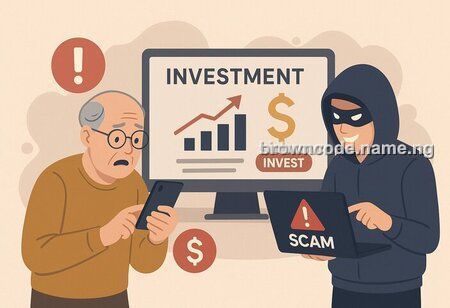
Investment fraud is not new. But the scale, sophistication, and reach of modern investment schemes have reached levels that regulators and law enforcement struggle to keep pace with. Across Africa, Europe, North America, and Asia, billions of dollars are lost every year to investment fraud that begins with a convincing presentation, delivers early returns to build trust, and then collapses — taking everything investors deposited with it.
Every investment fraud in history has looked like a legitimate opportunity to the people who lost their money in it. That is not a coincidence. It is the design.
The Anatomy of a Ponzi Scheme
The most common structure underlying investment fraud is the Ponzi scheme — a system where early investors are paid returns using money deposited by newer investors rather than from any genuine investment activity. This creates the appearance of a profitable, legitimate business because people actually do receive payments in the early stages.
The scheme requires a constant inflow of new investors to pay existing ones. When new recruitment slows, the scheme collapses. The people at the bottom of the recruitment chain — often the most people — lose everything. The people who introduced them frequently lose everything as well, because they reinvested their early returns.
Red Flags That Reveal Investment Fraud
Guaranteed returns with no risk — no legitimate investment can guarantee specific returns because all real investment involves market risk - Returns significantly higher than what established financial institutions offer — if banks offer 12 percent annually and a platform promises 40 percent monthly, one of them is lying - Pressure to recruit other investors in order to unlock higher returns or withdraw your own funds - Vague, technical-sounding explanations of how the money is actually generated that cannot be independently verified - Urgency around investment deadlines — "this window closes in 48 hours" - Difficulty withdrawing funds, with excuses, delays, or new requirements introduced each time withdrawal is requested
The Trust Network Exploitation
The most devastating investment frauds spread through personal trust networks — churches, family groups, professional associations, and friend circles. When someone you trust and respect tells you they have already made money from an investment, your skepticism drops dramatically. Fraudsters deliberately seed their schemes into trusted communities because the social proof of people you know receiving payments is extraordinarily convincing.
Verify every investment opportunity independently of the person who introduced it to you - Check the platform against your country's securities regulator's licensed operator list - Research the names of founders and operators — legitimate investment businesses have verifiable histories
Before You Invest Anything
Confirm the investment is registered with the relevant financial regulatory authority in your country - Understand completely and specifically how the investment generates returns - Never invest money you cannot afford to lose entirely - Seek an independent second opinion from a qualified financial professional who has no connection to the investment
Conclusion
The promise of fast, easy, high returns is not an investment opportunity. It is a trap engineered specifically for people who need money to grow quickly. The only investments that are real require time, carry genuine risk, and are registered with legitimate regulatory authorities. If something feels too good to be true, the most financially protective action you can take is to walk away completely.
Get new Security & Fraud alerts
One email when a new security & fraud article like this one goes live. No spam, unsubscribe anytime.