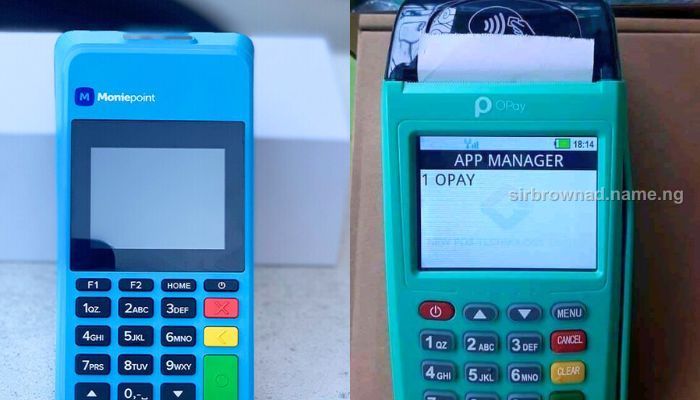
If you run a business in Nigeria today — whether you sell clothes, food, electronics, or services — there is a very high chance that most of your customers pay you through Moniepoint or OPay. These platforms are fast, accessible, and deeply embedded in how everyday Nigerians move money.
That is exactly why scammers have made them their primary weapons.
Sir Brown AD has seen too many hardworking Nigerian entrepreneurs lose goods, lose money, and sometimes lose entire businesses to fake transfer alerts on these two platforms. This article exists because awareness is the most powerful defence you have.
Your Moniepoint SMS means nothing. Your OPay SMS means nothing. Only what shows inside the app is real.
Why Scammers Target Moniepoint and OPay Specifically
Traditional bank alerts from GTBank, Access, Zenith, or UBA have been around long enough that many business owners have learned to be cautious. But Moniepoint and OPay are newer, faster, and more widely adopted by market traders, food vendors, logistics operators, and online sellers — many of whom are first-time business owners who have never encountered this scam before.
Scammers know this. They specifically study these platforms and build fake alert tools that clone the exact SMS format, sender ID, language, and structure of real Moniepoint and OPay notifications. The result is a fake alert so convincing that even experienced business owners have been fooled.
How Moniepoint Fake Alerts Work
Moniepoint has become the dominant payment platform for physical retail businesses, market traders, and logistics companies across Nigeria. Walk through any Nigerian market today and you will see Moniepoint account numbers displayed on stalls, printed on receipts, and shared across WhatsApp business pages.
Scammers target these businesses deliberately. Here is their exact process.
They identify your Moniepoint account number from your social media page, your signboard, or from a previous legitimate transaction. They then use a fake alert application — widely available and disturbingly easy to use — to generate an SMS that mirrors a real Moniepoint credit notification. The message includes a realistic transaction ID, the correct account number suffix, a sender name that matches what Moniepoint uses, and the exact amount you requested.
They send this to their own phone number and then forward it to you as a screenshot, or in some cases they have configured the fake SMS to appear to come directly to you.
Then comes the pressure. "I've sent it. Please confirm and release my order." "The alert is there, why are you delaying?" "I'm in traffic, please just give my person the package."
If you release based on that SMS — your goods are gone and no money ever moved.
What to do for Moniepoint payments:
Open your Moniepoint app immediately. Check your transaction history directly. A real credit appears in your transaction list within seconds. If you operate a Moniepoint POS terminal, check the terminal history — real credits appear there too. If the credit is not showing in either place, the payment did not happen. No exceptions.
How OPay Fake Alerts Work
OPay is the platform of choice for food vendors, online fashion sellers, beauty service providers, and digital product businesses. Its speed and zero-fee transfers made it incredibly popular — and that popularity made it a prime target.
OPay fake alerts follow the same pattern but with one additional manipulation that Sir Brown AD wants you to know specifically.
Scammers using OPay fake alerts often tell you the transfer is "processing" and will reflect "in a few minutes." This buys them time. They collect their order, receive their service, or get their goods delivered — and then disappear before you realize the processing message was a lie and nothing is coming.
OPay real transactions are near-instant. If someone tells you their OPay transfer is still processing after two minutes, that is your signal to stop everything.
What to do for OPay payments:
Open your OPay app. Check your wallet balance. Check your in-app transaction history. Every real OPay payment generates both an SMS and an in-app notification simultaneously. If there is an SMS but no in-app record — the SMS is fake. The in-app record cannot be forged. The SMS can.
The Fake Alert Apps Fuelling This Crisis
It would be incomplete to discuss this topic without acknowledging the tools being used against you. There are applications — some available on obscure websites, some shared through Telegram channels — that allow anyone to generate convincing fake bank and fintech alerts in seconds. These apps let the user choose the bank or platform, enter any amount, enter any sender name, and generate a screenshot or even an SMS that looks indistinguishable from a real notification.
This is not sophisticated hacking. It requires no technical skill. A teenager with a smartphone can generate a fake Moniepoint alert in under sixty seconds. This is the reality of the environment Nigerian business owners are operating in today.
Sir Brown AD is not sharing this to frighten you. He is sharing it so you understand why no SMS — from any platform, any bank, any fintech — should ever be your confirmation of payment. Ever.
The Platforms Are Not to Blame — But They Can Do More
Moniepoint and OPay are legitimate, well-run financial platforms that have genuinely transformed commerce in Nigeria. The existence of fake alert tools is not their fault. However, both platforms could do more to educate their merchant users about this threat through in-app warnings, merchant onboarding education, and public awareness campaigns.
Until that happens, the responsibility falls on you as a business owner to protect yourself.
Six Rules Sir Brown AD Lives By — And You Should Too
Rule 1 — The app is your only source of truth. Not SMS. Not screenshots. Not voice calls claiming payment was made. Open the app, check the balance, confirm the transaction history. That is the only confirmation that counts.
Rule 2 — Real buyers are never in a hurry to skip your verification.** A legitimate customer who genuinely paid you will wait patiently while you confirm. They know the money left their account. They are not worried. Only someone who knows no money moved will pressure you to skip confirmation.
Rule 3 — No confirmation, no release. Make this your non-negotiable business policy. Write it on your page. Say it out loud when taking orders. "I release only after payment confirms in my app." Say it once, say it clearly, and mean it every time.
Rule 4 — Processing means nothing. If a customer says their transfer is "processing," your goods stay with you until it finishes processing and appears in your app. You are not a bank. You are not responsible for their transfer delays. Your obligation begins when money reaches you — not before.
Rule 5 — Use payment links when possible. Paystack, Flutterwave, and Squad allow you to generate payment links that customers can pay through directly. When payment is made through a link, you receive confirmation on your merchant dashboard — not just an SMS. This eliminates the fake alert risk entirely for online transactions.
Rule 6 — Educate everyone who touches your money. If you have staff, family members, or assistants who handle orders or confirm payments on your behalf, they need to know everything in this article. One uninformed person in your business is all a scammer needs.
What to Do If It Has Already Happened to You
If you have already been defrauded through a fake transfer alert, take these steps immediately.
Report to your bank or fintech platform with all evidence — screenshots of the conversation, the fake alert, the order details, and the time of the incident. While recovery of goods is unlikely, reporting creates a record.
File a complaint with the Nigeria Police Force Cybercrime Unit or report online through their official channels. Repeat offenders are often caught through accumulated reports.
Share your experience — anonymously if necessary — in your business community. Every story shared is a scam prevented for someone else.
And then implement every rule in this article immediately. The best response to being defrauded is to make sure it never happens again.
Conclusion
Moniepoint and OPay have given millions of Nigerians access to fast, affordable financial services. That is genuinely good for the country and for small business. But the same accessibility that made these platforms powerful has also made them the preferred weapons of fraudsters.
Sir Brown AD built browncode.name.ng to ensure that Nigerian entrepreneurs — especially young ones building from scratch — have access to the same quality of business intelligence that protects larger companies. You deserve to know how the system works and how to protect yourself within it.
The knowledge in this article is free. Use it. Share it. And never release goods on an SMS alone again.
Get new Security & Fraud alerts
One email when a new security & fraud article like this one goes live. No spam, unsubscribe anytime.