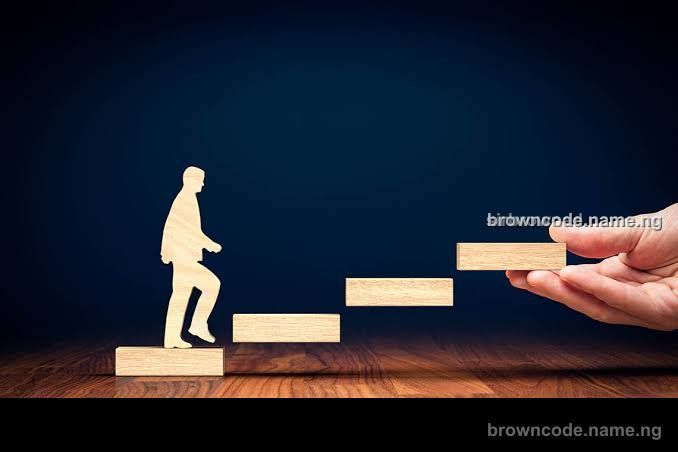
The personal development industry generates billions of dollars annually and produces very little lasting transformation for the vast majority of people who consume its content. Not because growth is impossible, but because the overwhelming majority of popular advice targets surface behaviors while completely ignoring the deeper identity structures and belief systems that actually drive those behaviors. Real, durable transformation begins underneath the level of action — in the mental frameworks, internal narratives, and emotional patterns that unconsciously govern every decision you make.
You cannot consistently act in ways that contradict your self-concept. Change your identity first. The behaviors follow automatically.
Identity Precedes All Sustainable Behavior Change
The single most powerful insight in genuine personal development is this: you do not rise to the level of your goals — you fall to the level of your identity. Your behavior in any given moment is a direct expression of who you believe yourself to be, not what you consciously want or intend. If you believe at an identity level that you are someone who is bad with money, no budgeting system, no matter how sophisticated, will produce lasting financial discipline. If you believe at a core identity level that you are not a natural leader, no leadership course will produce genuine leadership behavior that persists under pressure.
Sustainable transformation requires the uncomfortable, patient work of updating the story you tell yourself about who you fundamentally are — before attempting to change what you do.
The Invisible Compounding of Marginal Gains
Most people abandon growth efforts long before results become visible because the early stages of development produce no observable change. Human development works on exactly the same mathematical principle as compound interest — small, consistent improvements accumulate invisibly for extended periods and then produce sudden, dramatic, seemingly overnight results that observers attribute to luck or talent.
Improving by just one percent in any skill or discipline every single day produces results that are mathematically 37 times better by the end of a single year. The critical discipline is developing the emotional capacity to tolerate the long invisible phase — the period where you are putting in consistent effort and seeing no measurable return — long enough to reach the visible exponential phase.
CONSISTENCY THROUGH THE INVISIBLE PHASE IS THE ENTIRE GAME.
Environment Design Outperforms Willpower Every Time
Willpower is a finite, depletable cognitive resource that diminishes with every decision made throughout the day. The highest performers across every domain do not rely on willpower to sustain their disciplines. They design their physical and digital environments to make desirable behaviors automatic and effortless while making undesirable behaviors inconvenient and friction-filled.
Want to read more books? Place a book on your pillow every morning. Remove the television from your bedroom. - Want to exercise consistently? Sleep in your workout clothes. Put your gym bag by the front door the night before. - Want to use your phone less? Remove social media apps from your home screen. Charge your phone in a different room overnight. - Want to eat healthier? Remove unhealthy options from your home. Stock visible, accessible healthy foods at eye level.
Environment architecture produces behavioral results that motivation, inspiration, and willpower-based discipline systems simply cannot sustain long-term.
The Productivity of Unscheduled Mental Space
Modern achievement culture has constructed a mythology around busyness as a proxy for productivity and importance. Calendars filled to capacity, constant task-switching, and zero unscheduled time are treated as evidence of serious professional commitment. The research tells a very different story. The most creative, innovative insights — the unexpected connections between ideas, the solutions to problems that have resisted direct attack, the strategic clarity about direction — almost universally emerge during unscheduled, unfocused mental downtime rather than during intensive concentrated work sessions.
Protecting genuine mental rest space in your weekly schedule is not self-indulgence or laziness. It is the biological maintenance required for your highest cognitive and creative performance.
Strategic Discomfort as a Daily Practice
Growth is not found by making dramatic, terrifying leaps outside your comfort zone on rare occasions. Sustainable growth is produced by consistently, repeatedly choosing the slightly uncomfortable option over the comfortable one in the small, unremarkable decisions that make up the texture of ordinary days.
Speaking up with your genuine perspective in a meeting when your default is to stay silent - Starting the difficult conversation with a colleague or client that you have been systematically avoiding - Taking on the project that genuinely stretches your current capabilities rather than the one you could execute comfortably - Sharing your work publicly before you feel it is perfect enough to deserve an audience
These micro-choices, made consistently, compound into character traits, capabilities, and results that dramatic occasional leaps never produce.
The Transformative Power of Strategic Subtraction
Personal development culture is obsessively focused on addition — new morning routines, new productivity systems, new skills, new habits, new frameworks. But some of the most powerful personal growth available to any individual comes not from adding but from deliberately, courageously removing.
Removing relationships that consistently drain your energy without reciprocal investment or genuine support - Cutting commitments that no longer align with your actual values or current priorities - Eliminating digital inputs — news sources, social accounts, group chats — that fill your mental space with anxiety, comparison, and noise rather than insight or genuine connection - Saying no to opportunities that are genuinely good but not genuinely right for where you are trying to go
Strategic subtraction creates the cognitive and emotional space in which genuine growth becomes possible. You cannot fill a container that is already overflowing.
Deliberately Curating Your Five Closest Influences
Research consistently demonstrates that your attitudes, beliefs, income level, ambitions, and behavioral habits converge toward the average of the five people you spend the most time with and whose content you consume most regularly. This is not a metaphor. It is a documented psychological phenomenon called social norming — your sense of what is normal, possible, and appropriate for someone like you is continuously calibrated by your closest reference group.
This means that deliberately curating who you spend time with — both in physical relationships and in the media, content, and voices you allow consistent access to your attention — is one of the highest-leverage personal development investments available. Seek out people and communities where the standard of what is normal is higher than your current standard, and your sense of what is possible for yourself will expand to match.
You are not just influenced by your environment. Over time, you become it. Choose your environment with the same deliberateness you would choose your profession.
Conclusion
Real personal development is not a content consumption habit or a collection of productivity techniques. It is the sustained, uncomfortable, frequently unglamorous work of examining your foundational beliefs about yourself and what is possible for you, designing environments that make your best self automatic, and making the small daily choices that compound invisibly into a fundamentally different version of who you are. The work happens quietly. The results, when they arrive, appear extraordinary.
Get new Personal Growth alerts
One email when a new personal growth article like this one goes live. No spam, unsubscribe anytime.