Every article on this platform has examined fraud in its most familiar forms — fake alerts, cloned accounts, Ponzi schemes, phishing links. But there is a form of fraud older, larger, and more devastating than all of them combined, and it rarely gets named directly. It is the political scam. It does not arrive through a text message. It arrives through a podium, a campaign poster, and a solemn promise made in front of a crowd that desperately wants to believe.
A political scam is not a metaphor. It is a real, structured fraud that follows the same psychological blueprint as every other scam covered on this platform — manufactured urgency, borrowed trust, false social proof, and a collapse that leaves ordinary people holding the loss while the operators walk away enriched. The only difference is scale. Instead of emptying one bank account, a political scam empties a national treasury. Instead of defrauding one family, it defrauds generations.
A market trader who loses ₦50,000 to a Ponzi scheme feels the loss instantly. A nation that loses billions to political fraud feels the loss for thirty years, in the form of the school that was never built, the hospital that was never equipped, and the road that was never completed.
What a Political Scam Actually Is
A political scam is the deliberate use of political office, political promises, or political process to extract public trust and public resources for private gain, with no genuine intention of delivering the outcome that was promised. It follows a structure that should feel familiar to anyone who has read about Ponzi schemes or investment fraud on this platform, because the underlying mechanics are identical.
The scheme begins with a compelling pitch — a manifesto full of specific, emotionally resonant promises. Constant electricity. Functional roads. Free education. Job creation for millions of unemployed youth. Security that finally works. These promises are deliberately designed to target the exact pain points that ordinary citizens feel every single day, in the same way a Ponzi scheme's guaranteed returns are designed to target the exact financial desperation of its victims.
The pitch is amplified through trusted local networks — community leaders, religious figures, traditional rulers, and respected elders who lend their credibility to a candidate, often in exchange for personal benefit once that candidate assumes office. This is the same trust-network exploitation documented in religious investment fraud — borrowed credibility used to bypass the skepticism that a stranger's promise would normally trigger.
Once in office, the promised delivery either never materializes, materializes in a hollow, cosmetic form designed for photo opportunities rather than genuine impact, or is diverted through inflated contracts, ghost projects, and payroll fraud into private accounts. And when citizens ask what happened to the promises, the response is a reframing almost identical to the spiritual reframing used by collapsed Ponzi schemes — external forces are blamed, the opposition is blamed, the previous administration is blamed, global economic conditions are blamed. Anything except the operator who made the promise in the first place.
The Anatomy of Political Fraud in Practice
Understanding the mechanics in the abstract is useful, but the real damage becomes clear only when you look at how political fraud actually moves money in practice.
Contract inflation is one of the most common mechanisms. A road project genuinely worth ₦2 billion is awarded at a contract value of ₦8 billion. The difference does not build additional road. It is quietly distributed among officials, contractors, and intermediaries who exist specifically to launder the inflated margin back to the people who approved the contract in the first place.
Ghost workers and ghost projects represent another mechanism. Payroll systems list thousands of employees who do not exist, drawing real salaries every month into accounts controlled by officials. Capital projects are announced, commissioned with a ribbon-cutting ceremony, photographed extensively for campaign materials, and then never actually completed — because the money allocated for completion was never intended to reach the project in the first place.
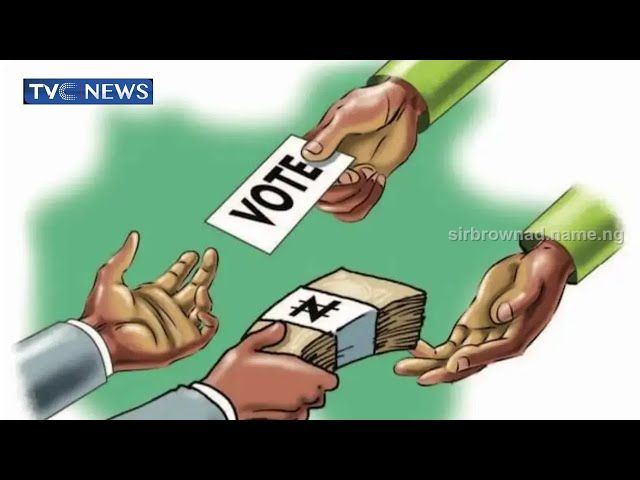
Budget padding inserts unnecessary or wildly overpriced line items into national and state budgets, diverting public funds toward private pockets under cover of legitimate-looking paperwork. And electoral fraud itself — vote buying, ballot box snatching, result manipulation — is the mechanism that installs and protects the officials running every other scheme, because free and fair elections are the single greatest threat to a political scam's continuity.
What This Has Actually Cost Nigeria and Nigerians
The cost of political fraud in Nigeria is not an abstract statistic confined to newspaper headlines. It is measured in the specific, daily texture of ordinary Nigerian life.
It is measured in the businesses that never scaled because unreliable electricity forced entrepreneurs to spend on generators and diesel instead of growth. It is measured in the graduates who left universities with degrees but no functioning economy able to absorb them into meaningful work, feeding directly into the desperation that fuels the investment fraud and Ponzi schemes covered elsewhere on this platform — because a population failed by its political system becomes a population vulnerable to every other kind of scam that promises a shortcut out of hardship.
It is measured in hospitals commissioned with fanfare that stand without functioning equipment, without adequate staff, without the drugs their pharmacies were budgeted to stock. It is measured in the roads that claim lives every year — not through natural disaster, but through potholes and collapsed bridges that were budgeted for repair years ago, with the money already spent on paper long before the road itself failed.
It is measured in the erosion of trust itself. When political fraud goes unpunished repeatedly, it does not just cost the money that was stolen. It teaches an entire population that institutions cannot be trusted, that honesty is a disadvantage, and that the fastest way to succeed is to find your own angle before someone else takes yours. This is not a minor cultural side effect. It is the deepest, most corrosive cost of political fraud — it manufactures the very cynicism and desperation that every other form of fraud covered on this platform depends on to survive.
A nation that cannot trust its leaders eventually stops trusting anyone. And a population that trusts no one is a population that fraudsters of every kind — political, financial, religious, digital — can operate in with devastating efficiency.
Why Political Scams Survive Exposure
Just as this platform has documented why Ponzi schemes survive public exposure and relaunch under new names, political fraud survives exposure through remarkably similar mechanisms.
Information reaches different communities unevenly, meaning that an exposé published in a national newspaper may never reach the rural community where the next election will actually be decided. Rebranding allows a politician exposed under one party or one administration to resurface under a new party, a new title, or a new political alliance — unrecognizable to voters who only knew to distrust the previous name. And the underlying economic desperation that makes vote buying effective — a few thousand naira in exchange for a vote — never disappears on its own, because the conditions that created that desperation are the very conditions the political scam was supposed to fix.
What Happens If Nigerians Actually Join Together to Stop This
This is the part of the story that deserves as much attention as the diagnosis, because understanding the disease is only useful if it leads somewhere.
If Nigerians across every region, religion, and economic class genuinely united to stop political fraud — not through a single election cycle of enthusiasm that fades by the next cycle, but through sustained, generational civic discipline — the transformation would not be incremental. It would be structural.
Collective, sustained voter education would make vote buying dramatically less effective, because a community that understands the true cost of selling a vote for a few thousand naira today makes a fundamentally different calculation than one that has never been shown the connection between that transaction and the state of its roads five years later.
Active citizen monitoring of budgets and capital projects — something increasingly possible through simple smartphone documentation, community WhatsApp groups repurposed for accountability instead of misinformation, and local journalism — would make ghost projects and inflated contracts dramatically harder to hide. Sunlight remains the most effective disinfectant against fraud, whether that fraud lives in a bank account or a budget line.
A unified refusal to accept ethnic, religious, or regional loyalty as a substitute for competence and integrity would remove one of the most reliable tools political fraud has ever used to divide potential opposition and protect underperforming leaders. Fraud thrives on division. It cannot survive a population that judges leaders by delivery rather than identity.
And critically, sustained pressure on anti-corruption institutions — insisting on consistent prosecution regardless of political affiliation, insisting on asset recovery that visibly returns stolen funds to public use, insisting that today's opposition faces the same scrutiny it demands of today's government — would begin to change the fundamental risk calculation for anyone considering political fraud as a viable career strategy.
EVERY NAIRA RECOVERED FROM POLITICAL FRAUD AND VISIBLY RETURNED TO A ROAD, A HOSPITAL, OR A SCHOOL IS PROOF TO THE NEXT GENERATION THAT HONESTY IS NOT NAIVE. IT IS THE ONLY STRATEGY THAT ACTUALLY BUILDS A COUNTRY.
The compounding effect of this kind of unity would extend far beyond politics itself. A nation whose citizens trust its institutions again becomes a nation whose citizens are less vulnerable to every other form of fraud this platform has documented — because so much of that vulnerability is downstream of the desperation, cynicism, and economic exclusion that political fraud manufactures in the first place. Stop the fraud at the top, and the pressure that pushes ordinary Nigerians toward Ponzi schemes, fake investment platforms, and desperate financial risk-taking begins to ease.
Conclusion
A political scam is not fundamentally different from every other fraud examined on this platform. It exploits the same trust, follows the same collapse pattern, and survives through the same combination of rebranding and unaddressed desperation. What makes it uniquely devastating is scale — it does not empty one account, it empties a nation's potential, one budget cycle at a time.
But the same principle that protects an individual from a fake bank alert protects a nation from political fraud: awareness of the mechanism, refusal to act on manufactured urgency, and a community that verifies before it trusts. The only difference is that this time, the verification has to happen together, at the scale of an entire population — because political fraud, unlike a scam targeting one person, can only be stopped by everyone, together, at once.
The work starts exactly where every other article on this platform has insisted it must start: refusing to look away from how the fraud actually operates.
Get new Security & Fraud alerts
One email when a new security & fraud article like this one goes live. No spam, unsubscribe anytime.