Loan App Scams in Nigeria: How They Steal Your Contacts and Blackmail You
A new loan app appears almost every week. Many of them want one thing more than your repayment: your contact list. Sir Brown AD explains how loan app blackmail works, why your data may end up leaked or sold, and exactly where to check before you borrow.
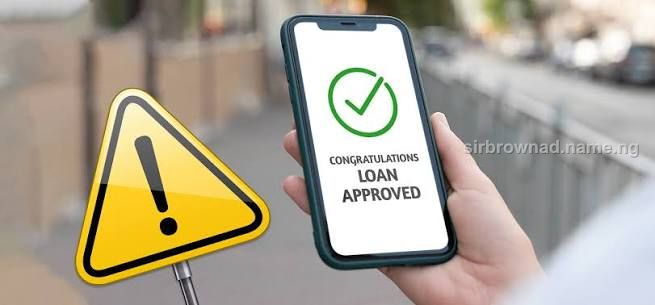
If you have ever downloaded a loan app in Nigeria, you already know the feeling. You need money urgently. The app promises cash in five minutes. It asks for a few permissions. You tap allow, allow, allow, because you are in a hurry.
For many people that was the moment they handed over their mother's number, their boss's number, their pastor's number and their private photos to a stranger.
Some loan apps are not really in the lending business. They are in the data business, and your shame is how they collect.
How the Trap Works
The pattern is consistent across many complaints in Nigeria.
The bait. A new app appears with a flashy ad, a high rating and the promise of instant cash with no paperwork.
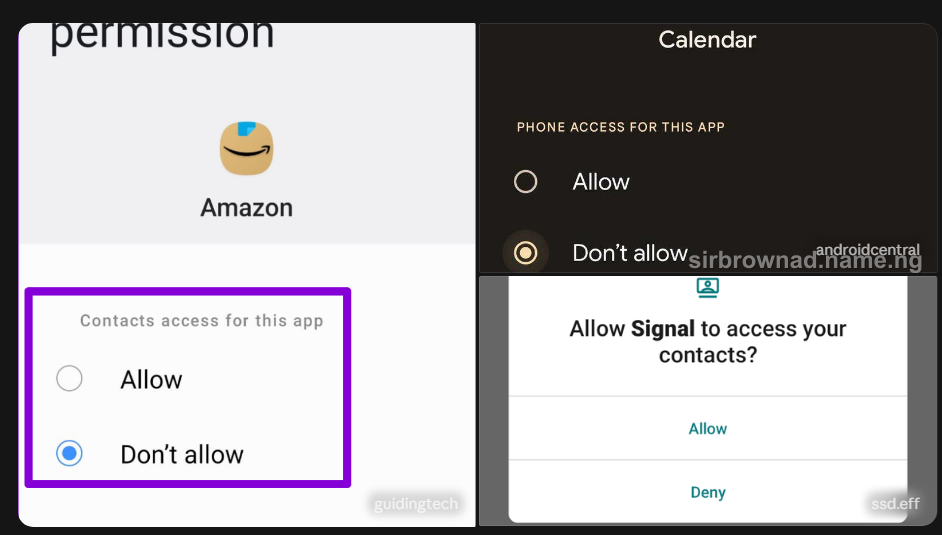
The permissions. To qualify, the app asks for access to your contacts, messages, photos or location. A lender needs your ID and bank details. It does not need your whole phonebook.
The terms. You get a smaller amount than you applied for, with a very short repayment window and a heavy fee or interest. Some borrowers report being charged for loans they never received.
The pressure. The day you miss the deadline, calls and messages begin. Then they move from you to the people you know.
The shame. Your contacts receive messages calling you a thief or a fraudster. Your name, number and photo are circulated to family, colleagues and religious leaders. Many people pay out of embarrassment, sometimes more than they ever owed.
This is not a rumour. Nigeria's data regulator fined one lender N10 million after it sent privacy-invading messages to borrowers' contacts who had never agreed to be involved, and found that its app also embedded trackers sharing data with third parties without telling users. More recently, the Nigeria Data Protection Commission has said it is investigating over 400 reported cases, including unauthorised access to contact lists and the circulation of personal images without consent.
What Is Really Happening to Your Data
New Updates

When you grant contact access, the app can copy your entire phonebook to its server, including how you saved each person, such as Mum, Oga at work, or Pastor. That list becomes a pressure tool. Message access can show your bank alerts and balance. Photo access can expose private pictures. And uninstalling the app does not delete what has already been uploaded.
Why New Loan Apps Every Week Should Worry You
When a market is flooded with new apps, three things follow.
Many are copies. Names change, logos change, and the same operators can return under a new name after one is removed.
Security is weak. A rushed app built to collect data fast is rarely built to protect it. Every borrower's BVN, bank details, phone number, ID and contact list sits on someone's server.
Apps do not live forever. Lenders run out of money, get shut down or simply disappear. When a company collapses, the database does not vanish. It can be abandoned unprotected, breached, or sold.
Nobody can say exactly which apps will fail or when. But this is the realistic risk: the more of these apps you give your details to, the more places your BVN, account number, phone number and family contacts exist. Once that data leaks or is sold on, it feeds exactly the fraud this platform has covered before, such as SIM swap attempts, phishing calls that already know your name and bank, and impersonation of your relatives. You cannot take a leak back.
THE LOAN MAY BE 20,000 NAIRA. THE DATA YOU GIVE AWAY CAN COST YOU FAR MORE.
Apps Regulators Have Already Ordered Off the Play Store
This is not only theory. In 2023 the FCCPC ordered Google to remove 18 loan apps from the Play Store because they were operating without regulatory approval or breaking the digital lending guidelines. The action began on July 20, 2023 with Getloan and Camelloan, and the full list of 18 was published on August 2, 2023. The FCCPC also barred payment gateways from serving the affected lenders. The apps on the list were:
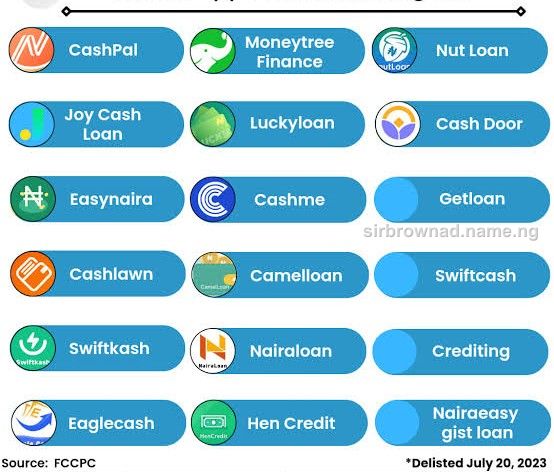
Getloan, Joy Cash-Loan, Camelloan, Cashlawn, Nairaloan, Eaglecash, Moneytree Finance, Luckyloan, Cashme, Easynaira, Swiftcash, Crediting, Swiftkash, Hen Credit, Nut Loan, Cash Door, Cashpal and Nairaeasy Gist Loan.
Two honest notes. First, being ordered off the Play Store means the regulator found a registration or guideline violation. It does not prove every borrower of that app was blackmailed. Second, this list is from 2023 and the register changes, so use it as a warning, then confirm any lender's current status on the FCCPC website yourself. The FCCPC later said the number of delisted apps had grown to 37, which shows how quickly new names replace old ones.
Where to Check Before You Apply
Spend two minutes on this before you download anything.
The FCCPC register. The Federal Competition and Consumer Protection Commission publishes the list of approved digital lenders at fccpc.gov.ng/registration-of-digital-money-lenders. Digital lenders must now register under the 2025 digital lending regulations. Reports say over 500 lenders have full approval, while dozens of illegal apps have been blacklisted, so a name that is missing, or listed as blacklisted or under investigation, is a clear stop sign. Match the exact company name and app name, not just a similar one.
The CBN. Banks and microfinance banks are licensed by the Central Bank of Nigeria. Check the CBN website if the lender claims to be one.
The Play Store listing itself. Look at the developer name, the privacy policy and the permissions requested. A lender that wants your contacts and gallery is a red flag.
Real complaints. Search the app name with words like complaint, harassment or blackmail, and read recent reviews, not just the star rating.
The terms. Before you accept, check the amount you will actually receive, the total you must repay, the due date and all fees. If the app hides them, walk away.
Before You Tap Allow
Deny contacts, SMS and gallery permissions. If the app will not work without them, delete it.
Never borrow from an app you cannot verify, even when you are desperate.
Do not borrow from one app to repay another. That path leads to a debt spiral.
Check your phone's permission settings now, and remove contacts access from any loan app already installed.
If You Are Already Being Harassed
Do not pay out of shame, and do not pay people who threaten you. Paying rarely ends it.
Screenshot every message, number and threat. Save call logs.
Warn your close contacts in one short message: loan app harassers may be messaging them, and they should ignore and not forward anything.
Report the app to the FCCPC through fccpc.gov.ng, using lenderstaskforce@fccpc.gov.ng for complaints (or contact@fccpc.gov.ng), and report data misuse to the Nigeria Data Protection Commission at ndpc.gov.ng.
Report threats or edited photos to the police or the EFCC. Defaming or threatening someone to collect a debt is not a legal way to recover money.
If your BVN, ID or bank details were exposed, tell your bank, watch your accounts, and be ready for calls from people who already know your details.
A debt owed to a legitimate lender is still a debt, and you should deal with it honestly. But a legitimate lender does not threaten you or shame you in front of your family.
Conclusion
Loan apps can genuinely help people who need short-term cash. The danger is the ones that treat your phone as the real prize. Before you apply, check the lender on the FCCPC register, refuse permissions it does not need, and read what you will actually repay. Taking two minutes to verify is cheaper than months of harassment, and a stolen contact list can never be returned.
Platforms like browncode.name.ng will keep explaining how these schemes work, because the best time to learn the trick is before it is used on you.
Get new Security & Fraud alerts
One email when a new security & fraud article like this one goes live. No spam, unsubscribe anytime.
Join my WhatsApp channel
Get new articles, fraud alerts and web security tips straight to your phone.
Found this useful? Share it.
Someone you know may be about to fall for a scam or make a costly mistake. Send them this.
This article was originally written and published by Sir Brown AD.
Advertise with us
Sir Brown AD
Keep reading, or tell me about what you're building.
Discussion